Most people consume far more sugar than they realize — and the search for a reliable alternative to sugar has never been more relevant. Whether you’re managing blood sugar levels, cutting calories, or simply trying to eat more mindfully, the options available today go well beyond bland substitutes. Some are derived from plants, others from fermentation, and a few have been used in traditional medicine for centuries.
Why people are moving away from refined sugar
Refined white sugar delivers quick energy but very little else. It has no fiber, no minerals, and no vitamins — just fast-acting carbohydrates that spike blood glucose and then leave you craving more. Nutritionists commonly refer to this pattern as the “sugar cycle,” and it’s one of the key reasons people begin exploring natural sweeteners and low-glycemic alternatives.
Beyond weight management, there are other compelling reasons to reconsider how much added sugar goes into your daily diet. Research consistently links high sugar intake to inflammation, increased triglycerides, and energy crashes throughout the day. The good news is that cutting back doesn’t mean sacrificing sweetness entirely.
Natural sweeteners worth knowing about
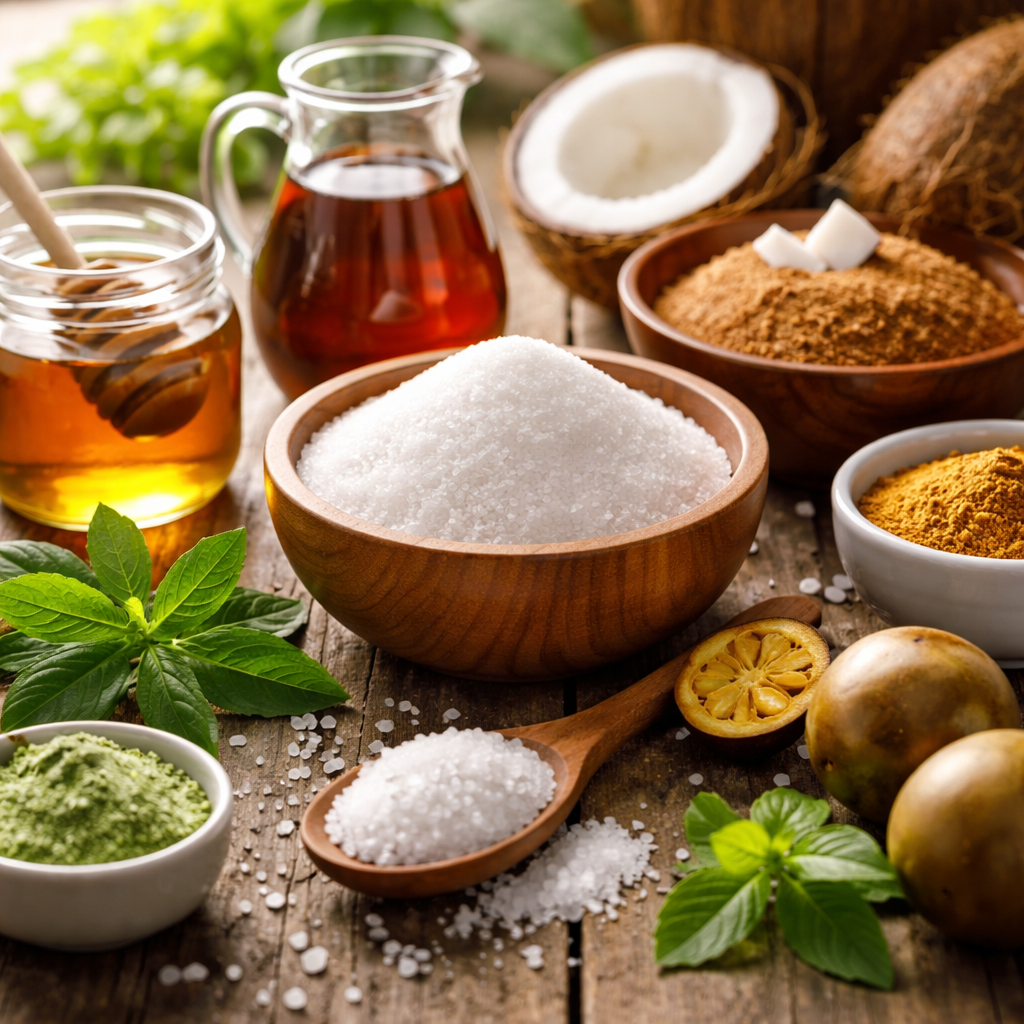
Not all sweeteners are created equal. Some come with genuine nutritional benefits, while others are simply lower on the glycemic index. Here’s a closer look at the most well-researched options:
| Sweetener | Source | Glycemic Index | Key benefit |
|---|---|---|---|
| Raw honey | Bees / flower nectar | ~58 | Contains antioxidants and enzymes |
| Maple syrup | Sugar maple tree sap | ~54 | Contains manganese and zinc |
| Coconut sugar | Coconut palm sap | ~35 | Contains inulin fiber |
| Stevia | Stevia rebaudiana plant | 0 | Zero calories, does not affect blood glucose |
| Monk fruit sweetener | Luo han guo fruit | 0 | Zero calories, rich in antioxidants |
| Erythritol | Fermented glucose | ~1 | Nearly calorie-free, tooth-friendly |
Each option has its own flavor profile and practical uses, so the “best” choice really depends on what you’re cooking, baking, or sweetening.
Stevia and monk fruit: the zero-calorie front-runners
Stevia has been used as a sweetener in South America for generations, long before it reached international markets. The sweetness comes from compounds called steviol glycosides, which are 200–300 times sweeter than sucrose — meaning you need a very small amount to achieve the same effect. It has no impact on blood glucose, making it a popular choice among people with type 2 diabetes or insulin resistance.
Monk fruit sweetener works similarly. It gets its sweetness from mogrosides, which are antioxidant compounds. Unlike stevia, monk fruit tends to have a cleaner aftertaste, which many people find more neutral and pleasant in beverages like coffee or tea.
Stevia and monk fruit are among the few sweeteners that have been studied specifically in the context of blood sugar regulation, and both show a neutral effect on insulin response in healthy adults.
When “natural” doesn’t automatically mean “better”
There’s a common misconception that anything labeled “natural” is automatically healthier than refined sugar. Honey, maple syrup, and coconut sugar are all natural — but they still contain calories and affect blood glucose levels. For someone monitoring carbohydrate intake, these sweeteners require the same attention as regular sugar, just with some added micronutrients as a bonus.
Raw honey, for instance, contains small amounts of pollen, propolis, and enzymes that have antimicrobial properties. But a tablespoon still delivers around 17 grams of sugar. The same applies to agave syrup, which is often marketed as a diabetic-friendly option — in reality, its high fructose content may place additional strain on the liver when consumed in large amounts.
Sugar alcohols: a middle-ground option
Erythritol, xylitol, and sorbitol belong to a category called sugar alcohols. They provide sweetness with fewer calories and a lower glycemic response than regular sugar. Erythritol in particular is well-tolerated by most people because it’s absorbed in the small intestine rather than fermented by gut bacteria — which is why it causes far less bloating compared to sorbitol or maltitol.
- Erythritol: 0.2 calories per gram, glycemic index of ~1, good for baking
- Xylitol: 2.4 calories per gram, known to support dental health by inhibiting bacteria that cause cavities
- Sorbitol: found naturally in some fruits, often used in commercial “sugar-free” products, can cause digestive discomfort in larger doses
One important note for pet owners: xylitol is highly toxic to dogs, even in small amounts. If you use xylitol-based products at home, keep them completely out of reach.
How to actually reduce sugar without feeling deprived
Switching sweeteners is just one part of the picture. Many people find that their taste preferences genuinely shift after a few weeks of lower sugar intake — foods that once seemed perfectly sweet begin to taste overpowering, and fruits start to satisfy cravings that used to require chocolate or pastries.
A few approaches that tend to work well in practice:
- Gradually reduce the amount of sweetener in your coffee or tea rather than switching cold turkey
- Use spices like cinnamon, cardamom, or vanilla extract to enhance the perception of sweetness without adding sugar
- Choose whole fruit over fruit juices — the fiber slows glucose absorption significantly
- Read ingredient labels carefully, since sugar appears under many different names including dextrose, maltose, cane juice, and high-fructose corn syrup
The transition doesn’t need to be dramatic or restrictive. Small, consistent changes tend to produce lasting results far more reliably than short-term elimination diets.
Finding what works for your body and lifestyle
There’s no single sweetener that works best for everyone. People with diabetes or metabolic conditions should consult with a healthcare provider before making significant dietary changes. Those who are simply looking to eat less processed food may find that a combination of monk fruit for beverages, coconut sugar for baking, and whole fruits for snacking covers most situations comfortably.
The key is to approach this as a long-term shift in habits rather than a strict rule system. Understanding what each sweetener actually does — how it’s metabolized, where it comes from, and how it behaves in food — puts you in a much stronger position to make informed choices every day.