Most people who go looking for an alternative to Facebook aren’t fleeing social media altogether — they’re just done with the noise, the data harvesting, and the algorithmic feed that shows them everything except what they actually want to see. The good news is that the landscape of social platforms has expanded dramatically, and there are now genuinely strong options depending on what you’re looking for: privacy, creativity, community, or simply a calmer digital life.
Why people are rethinking their relationship with Facebook
It’s not just about personal taste. Over the past several years, Facebook has faced serious scrutiny over how it handles user data, the spread of misinformation, and the psychological effects of its engagement-driven design. Many users — especially younger ones — report feeling mentally drained after scrolling, and privacy-conscious individuals are increasingly uncomfortable with the level of tracking involved in using Meta’s products.
At the same time, people still want connection. They want to share updates, follow communities, stay in touch with friends, and discover content they care about. The question isn’t whether to be social online — it’s where to do it more intentionally.
Platforms worth your attention
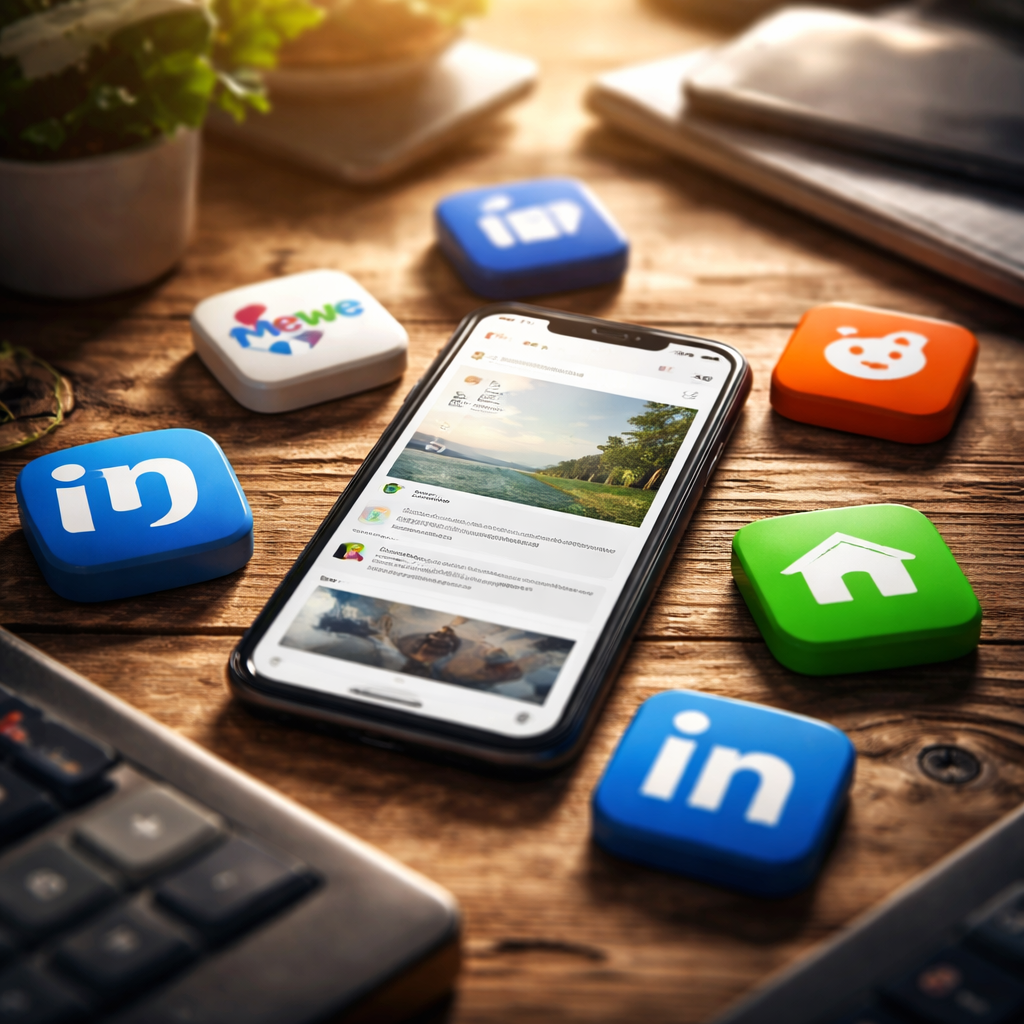
There’s no single “best” replacement — the right choice depends entirely on how you use social media and what you’re hoping to get out of it. Here’s a breakdown of the most credible options:
| Platform | Best for | Key strength |
|---|---|---|
| Mastodon | Open-source, decentralized social networking | No ads, no algorithm, full user control |
| MeWe | Private groups and personal sharing | No newsfeed ads, no data selling |
| Professional networking and career growth | Strong signal-to-noise ratio for work topics | |
| Topic-based communities and discussions | Deep niche communities on almost any subject | |
| Nextdoor | Hyperlocal neighborhood communication | Real-name, location-verified community |
| Diaspora | Privacy-first decentralized networking | Federated network with no central ownership |
Each of these serves a different core need, which is actually a feature, not a flaw. Facebook tried to be everything to everyone — and that’s part of why it became so overwhelming.
Mastodon and the decentralized web: a different model entirely
Mastodon operates differently from any mainstream platform. Instead of one central company controlling the network, it runs across thousands of independently operated servers — called “instances” — each with its own rules and community culture. You choose your instance, but you can still interact with users across the entire network.
There are no promoted posts, no algorithmic ranking designed to maximize your screen time, and no data sold to advertisers. Posts appear in chronological order. It sounds almost radical by modern standards, but for many users, it’s simply refreshing.
The federated model means no single entity can shut down the entire network, change the rules overnight, or sell your data to the highest bidder. That’s a structural guarantee, not a promise in a terms of service document.
The main challenge with Mastodon is the learning curve. Choosing an instance, understanding federation, and finding your community all take more effort than simply signing up for a mainstream app. But users who make it through that initial friction often report feeling much more in control of their experience.
MeWe and the privacy-first approach to social networking
MeWe was specifically built as a privacy-respecting alternative, and its business model reflects that. The platform doesn’t sell advertising based on user data and has a straightforward stance: your content and your connections belong to you, not the platform.
It supports groups, pages, direct messaging, and news feeds — a familiar structure for anyone coming from Facebook. The difference is in what’s absent: no algorithmic manipulation of what you see, no targeted ads, no third-party data sharing. It’s supported through optional premium features rather than advertising revenue.
Reddit, LinkedIn, and Nextdoor: specialized tools that do one thing well
Not every platform tries to replace the full Facebook experience, and honestly, that’s their strength. Reddit is built around topic-specific communities called subreddits — there are active communities covering everything from local city news to obscure technical hobbies to mental health support. If you value discussion and shared interests over personal profiles, Reddit delivers in a way Facebook rarely does.
LinkedIn, meanwhile, has carved out a genuinely useful space for professional networking, industry news, and career development. It’s not a perfect platform — it has its own engagement-bait problems — but if your Facebook use was largely professional or business-related, LinkedIn is a natural fit.
Nextdoor occupies an interesting niche: it’s built specifically for neighborhoods. Verified by location, it connects you with actual neighbors for practical things like local recommendations, safety alerts, lost pets, or community events. It won’t replace your broader social network, but it fills a real gap that no other platform addresses as directly.
How to actually make the switch without losing your connections
Leaving a platform where you’ve built years of connections and content feels daunting. But it doesn’t have to be a dramatic deletion. A more sustainable approach looks like this:
- Start by downloading your Facebook data archive — it contains your photos, posts, and contact information, so nothing is truly lost.
- Pick one alternative platform and spend a few weeks exploring it before deciding anything.
- Let your close contacts know where to find you — a simple post with your new profile or a direct message goes a long way.
- Use Facebook passively for a while if needed — checking occasionally without posting — to ease the transition without cutting everyone off.
- Uninstall the mobile app even if you keep the account; browser-based use dramatically reduces compulsive checking.
The goal isn’t to punish yourself for having used Facebook — it’s to find a setup that works better for your life, your privacy, and your mental wellbeing going forward.
The social web is bigger than one platform
The era of one dominant social network controlling how billions of people connect is slowly giving way to something more distributed — and more interesting. Decentralized protocols, privacy-focused tools, and niche communities are all growing in parallel. The shift isn’t happening overnight, but it is happening.
Whether you’re looking for a quieter corner of the internet, better data protection, more meaningful conversations, or simply a change of scene, the alternatives are real, functional, and used by millions of people who made the same decision you’re considering. You don’t have to rebuild everything from scratch — you just have to decide what matters most to you in a social platform, and then find the one that was actually designed to deliver it.