Running out of eggs mid-recipe or baking for someone with dietary restrictions doesn’t have to derail your plans — finding a reliable alternative to eggs in baking is easier than most people think, and some substitutes actually improve the final texture or flavor in unexpected ways.
Why eggs matter — and when you can replace them
Before swapping anything, it helps to understand what eggs actually do in a recipe. They serve multiple functions at once: binding ingredients together, adding moisture, helping batters rise, and contributing to structure. The tricky part is that one substitute rarely does all of these jobs equally well. That’s why the best swap depends heavily on what you’re making.
Cookies, quick breads, muffins, and pancakes are generally the most forgiving — these are the recipes where egg-free baking really shines. Delicate sponge cakes or choux pastry, on the other hand, rely so heavily on the protein structure of eggs that substituting becomes more of a challenge.
The most practical substitutes by function
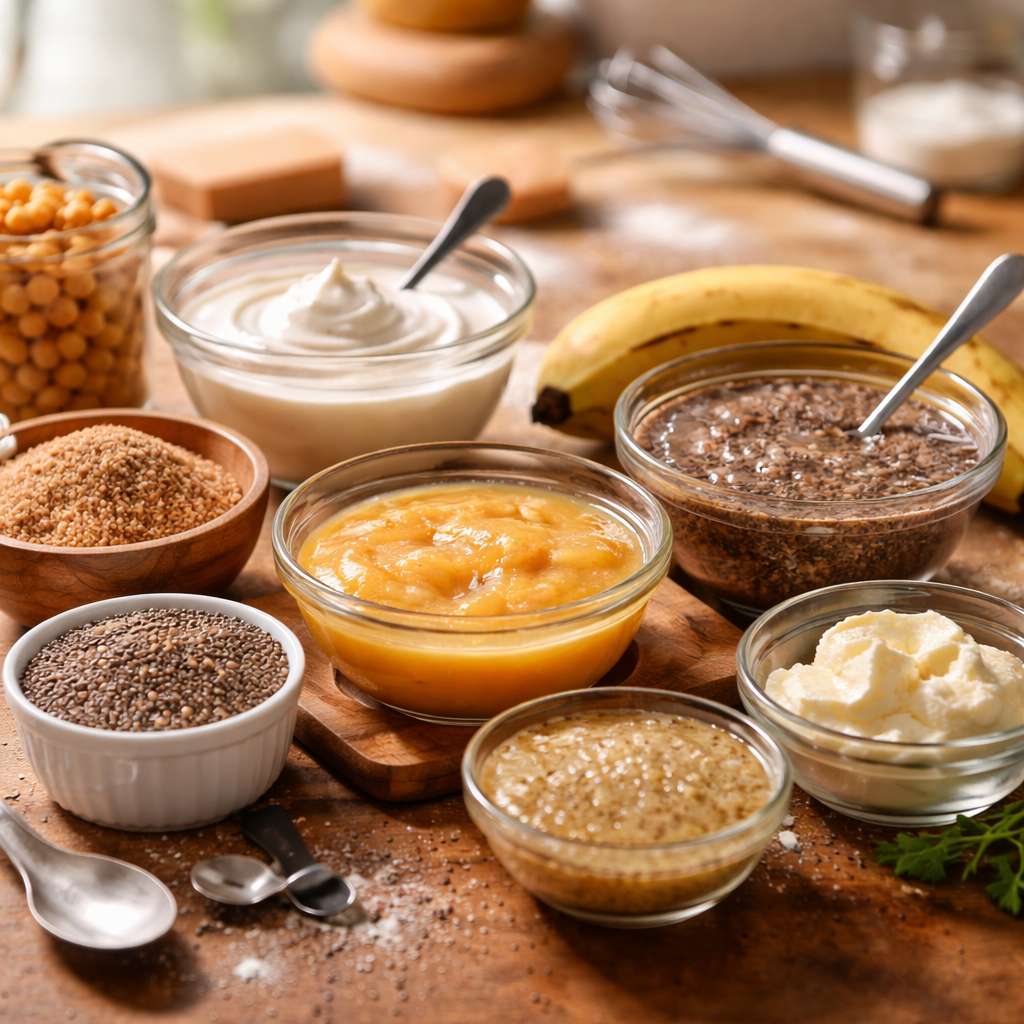
Here’s a breakdown of the most widely used egg replacers and what they do best:
| Substitute | Best for | Equivalent to 1 egg |
|---|---|---|
| Flaxseed meal + water | Cookies, dense breads, muffins | 1 tbsp ground flax + 3 tbsp water |
| Chia seeds + water | Pancakes, muffins, fruit loaves | 1 tbsp chia seeds + 3 tbsp water |
| Unsweetened applesauce | Muffins, spice cakes, brownies | ¼ cup (60 g) |
| Mashed banana | Banana bread, dense muffins | ½ medium banana (about 60 g) |
| Aquafaba (chickpea brine) | Meringues, mousses, light cakes | 3 tbsp |
| Plain yogurt or buttermilk | Cakes, quick breads | ¼ cup (60 g) |
| Silken tofu (blended) | Dense cakes, brownies, cheesecakes | ¼ cup blended |
| Commercial egg replacer | Most baked goods | Follow package instructions |
Each of these works through a different mechanism. Flax and chia seeds form a gel when mixed with water — this gel mimics the binding and moisture-retaining properties of a whole egg. Aquafaba, surprisingly enough, contains proteins that whip into stable foam much like egg whites, making it uniquely useful for recipes that need lift and airiness.
A closer look at flax and chia eggs
The so-called “flax egg” and “chia egg” have become go-to options for home bakers who want a simple, pantry-friendly solution. Both are made by mixing ground seeds with water and letting them rest for about 5–10 minutes until a gel forms. The result is a slightly viscous mixture that holds batters together without adding strong flavor — though flax does bring a very mild nutty note.
For best results with flax eggs, always use ground flaxseed (flaxseed meal) rather than whole seeds — whole seeds won’t absorb water in the same way and won’t form a proper gel.
These work especially well in oatmeal cookies, banana bread, and hearty muffins. They won’t make a fluffy genoise, but for everyday baking they’re incredibly reliable.
When applesauce and banana are the smarter choice
Fruit-based substitutes bring both binding power and natural moisture to the batter. Unsweetened applesauce is particularly neutral in flavor and works quietly in the background without changing the taste profile of your baked good. Mashed banana, on the other hand, will add its own flavor — which is a benefit in some recipes and a drawback in others.
If you’re making a chocolate muffin or a spiced carrot cake, neither applesauce nor banana will feel out of place. But in a vanilla sponge or a lemon loaf, banana might overpower the intended flavor. In those cases, applesauce or silken tofu tends to be a cleaner choice.
Aquafaba — the surprising egg white stand-in
Few discoveries in plant-based baking have been as genuinely exciting as aquafaba. The liquid drained from a can of chickpeas — something most people pour down the sink — whips into stiff peaks and behaves almost identically to egg whites. This makes it invaluable for vegan meringues, macarons, and whipped toppings.
It takes slightly longer to whip than egg whites and can be more sensitive to fat contamination, so make sure your bowl and whisk are completely clean and grease-free. Once whipped, it should be used fairly quickly, as it doesn’t hold its structure as long as egg whites do.
Tips for getting the texture right
- Don’t substitute more than two eggs at once without testing the recipe — replacing large quantities changes the structure significantly.
- Add a small amount of baking powder (about ¼ tsp extra per replaced egg) to help with lift when using denser substitutes like banana or tofu.
- If your batter looks too thick after substituting, add a tablespoon or two of plant-based milk to bring it back to the right consistency.
- Let your baked goods cool completely before cutting — egg-free versions can seem underbaked when warm but firm up nicely as they cool.
- For recipes calling for egg yolks specifically, silken tofu or a commercial replacer blended with a touch of oil tends to work better than gel-based options.
What actually works in your kitchen
The honest truth about egg substitutes is that there’s no single universal answer. What works brilliantly in one recipe might fall flat in another, and part of the process is simply testing and adjusting. That said, most everyday home bakers find that a combination of two or three trusted substitutes covers the vast majority of what they make on a regular basis.
Start with flax or chia eggs for cookies and muffins, reach for aquafaba when you need airiness, and keep applesauce on hand for quick breads and cakes. Once you get a feel for how each one behaves, adapting recipes stops feeling like guesswork and starts feeling intuitive — even without a single egg in the fridge.